What is Dementia?

Updated: Jun 20
Dementia is a broad term used to describe a range of cognitive impairments that affect an individual's ability to think, remember, and communicate. It is not a specific disease but rather a collection of symptoms that can be caused by various underlying conditions.
Dementia can significantly impact daily life, affecting not only the individual diagnosed but also their families and caregivers. Symptoms may include memory loss, difficulty with problem-solving, and changes in mood or behavior. As we delve deeper into understanding dementia, it is important to recognize that there are several distinct types, each with its own causes, symptoms, and progression.
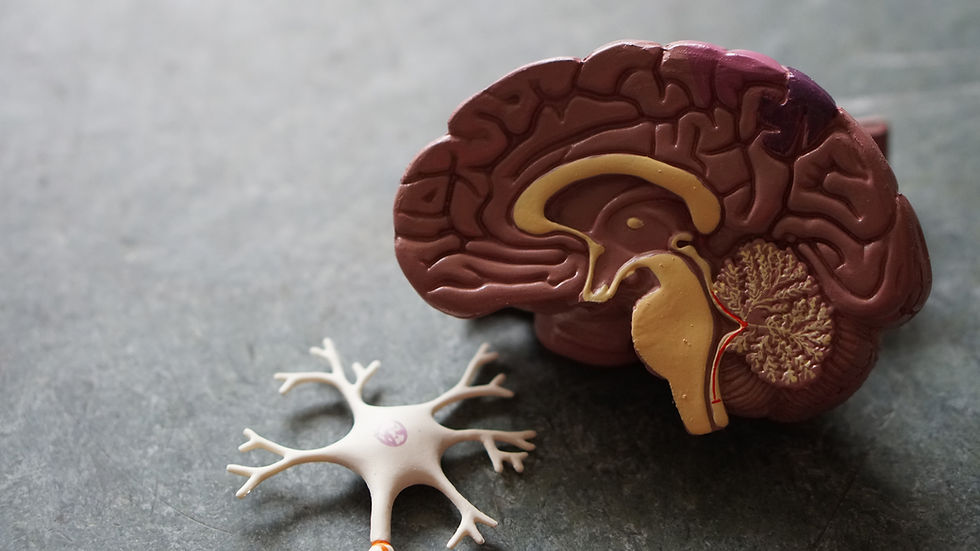
Types of Dementia
Click each title to learn more.
Alzheimer's
One of the most well-known forms of dementia is Alzheimer's. Likely by this point you have met someone, know of someone, or have heard of someone affected by it. It is one of the most commonly diagnosed memory related conditions.
Alzheimer's affects the person by gradually worsening over time, with memory loss affecting day to day function. While there is no definitive cause of Alzheimer's it is believed that the buildup of a protein, called beta-amyloid, builds up around the neuron (brain cells), acting like a barrier for communication between cells. At the same time, another protein called the tau, gets tangled on the neurons (brain cells) causing damage to the cell, eventually leading to cell death.
As these build up, the symptoms and side effects of Alzheimer's progress and worsen. The progression varies from person to person, but it is believed that the onset often begins 15 to 20 years prior to diagnose. Early screening and regular neurological assessments are being considered to diagnose patients earlier, potentially slowing down the disease and improving outcomes.
As of right now, there are a few treatments available to reduce severity of symptoms and prolong quality of life. While there is no cure, new research is developing every day to understand the condition.
Learn more at: Alzheimer's Association | Alzheimer's Disease & Dementia Help
Creutzfeldt-Jakob
Creutzfeldt-Jakob disease (CJD) is a rare neurodegenerative disorder caused by prions, which are misfolded proteins that lead to abnormal folding of normal proteins in the brain. This disease leads to rapid cognitive decline, memory loss, personality changes, and neurological symptoms such as muscle stiffness and coordination problems.
There are three types of CJD:
Classic CJD: The most common form, often occurring sporadically with no known cause.
Familial CJD: A hereditary form linked to genetic mutations
Acquired CJD: Results from exposure to infected tissue, such as through medical procedures or consumption of contaminated beef.
Symptoms of the condition include:
Rapidly decline in memory (dementia)
Problems with vision, seeing things that aren't there, or difficulty focusing,
Sudden, jerky movements of the muscles
Unsteady movements and difficulty with coordination.
As of right now, treatment is still being researched.
Learn more at: Home - CJD Foundation
Frontotemporal Dementia
Frontotemporal dementia (FTD) is a group of neurodegenerative disorders characterized by progressive degeneration of the frontal and temporal lobes of the brain. This condition often manifests in individuals at a younger age compared to other forms of dementia, typically occurring between the ages of 40 and 65.
The symptoms of FTD can vary significantly, as they are largely dependent on which areas of the brain are affected. Individuals may experience changes in personality, behavior, and language skills. Common behavioral symptoms include a decline in social skills, impulsivity, and emotional blunting, while language-related issues may manifest as difficulty in speaking or understanding language, known as primary progressive aphasia.
The exact cause of frontotemporal dementia remains largely unknown, although it is believed to involve a combination of genetic and environmental factors. Certain genetic mutations have been identified that increase the risk of developing FTD, particularly in familial cases where multiple family members are affected.
Diagnosis typically involves a comprehensive assessment, including clinical evaluations, neuroimaging, and sometimes genetic testing, to rule out other conditions and confirm the presence of FTD. Currently, there is no cure for frontotemporal dementia, and treatment options primarily focus on managing symptoms and improving the quality of life for both patients and caregivers.
Learn more at National Institute on Aging: Frontotemporal Disorders: Causes, Symptoms, and Diagnosis | National Institute on Aging
Huntington's Disease
Huntington's disease is a hereditary neurodegenerative disorder caused by a mutation in the HTT gene, leading to the progressive breakdown of nerve cells in the brain. This condition is not limited to old age but can appear later in life.
The hallmark symptoms of Huntington's disease include motor dysfunction, cognitive decline, and psychiatric issues. Patients may experience involuntary jerking or writhing movements, known as chorea, along with difficulties in coordinating movements and maintaining balance. Cognitive symptoms can include problems with memory, attention, and decision-making, while psychiatric manifestations often involve mood swings, depression, and anxiety.
The disease is progressive and while it has no cure, it can be managed with quality-of-life focused treatments, assisting with mobility and assistance with day-to-day tasks.
Learn more at: Huntington's Disease | National Institute of Neurological Disorders and Stroke
Lewy Body Dementia
Lewy Body Dementia (LBD) is a progressive neurological disorder characterized by the accumulation of abnormal protein deposits, known as Lewy bodies, in the brain.
This condition affects cognitive function, motor skills, and behavior, leading to symptoms that can include fluctuating attention and alertness, visual hallucinations, and parkinsonism, which manifests as tremors, stiffness, and balance issues. LBD is often misdiagnosed as Alzheimer's disease or Parkinson's disease due to overlapping symptoms, making early and accurate diagnosis crucial for effective management.
Patients with LBD may also experience sleep disturbances and changes in mood, adding to the complexity of the disorder. Medication to treat the various symptoms can be prescribed, however treatment focuses on quality of life, and there is not currently a cure.
Learn more at: Lewy Body Dementia Resource Center - 24/7 Support & Help
Normal-Pressure Hydrocephalus
Normal Pressure Hydrocephalus (NPH) is a brain condition where too much fluid builds up in the spaces of the brain, making them larger, but without causing high pressure inside the skull.
People with NPH often have three main problems: trouble walking, memory issues, and problems with bladder control. This condition is more common in older adults but is often confused with other types of dementia or normal aging.
To diagnose NPH, doctors usually use scans like MRI or CT to see the enlarged spaces in the brain. Treatment usually involves surgery to put in a device that helps drain the extra fluid, which can greatly help with symptoms if done early. When caught early, effects of this form of dementia can be reversed.
Learn more at: Normal Pressure Hydrocephalus (NPH): Symptoms & Treatment
Parkinson's
Parkinson's disease is a progressive neurological disorder that primarily affects movement control. It results from the degeneration of dopamine-producing neurons in the brain, leading to symptoms such as tremors, stiffness, slowness of movement, and balance difficulties.
While the exact cause of Parkinson's remains unclear, a combination of genetic and environmental factors is believed to contribute to its onset. The disease typically manifests in middle to late adulthood, and while there is currently no cure, various treatments, including medications and physical therapy, can help manage symptoms and improve quality of life for those affected. Ongoing research aims to better understand the mechanisms behind Parkinson's and to develop more effective therapies.
Learn more at: 10 Early Signs | Parkinson's Foundation
Vascular Dementia
Vascular dementia is a type of cognitive decline that occurs due to reduced blood flow to the brain, often resulting from strokes or other conditions that damage blood vessels. This form of dementia can lead to a range of symptoms, including memory loss, confusion, difficulty with problem-solving, and changes in mood or behavior.
Unlike Alzheimer's disease, which primarily affects memory, vascular dementia often presents with more pronounced difficulties in planning, organizing, and executing tasks. The progression of vascular dementia can vary significantly, depending on the underlying vascular issues, and it may occur in a stepwise manner, with sudden declines following strokes or mini-strokes.
Early diagnosis and management of risk factors such as hypertension, diabetes, and high cholesterol are crucial in slowing the progression of the disease and improving the quality of life for affected individuals.
Learn more at: Vascular cognitive impairment and vascular dementia - Symptoms & causes - Mayo Clinic
Understanding about the specific disease affecting you can help inform you about treatment options, and pinpoint resources that focus on your specific situation. Diagnosis can feel overwhelming, but you are not alone. Preparing for the future now can prevent a lot of miscommunications later, especially as the condition progresses.
When you're ready for the next step, check out Preparing for the Future for an understanding of the condition, or jump right into Coping with Fear After Diagnosis.
Pardon our ads, they allow us to keep our site running and keep our helpful content free to access.


Comments